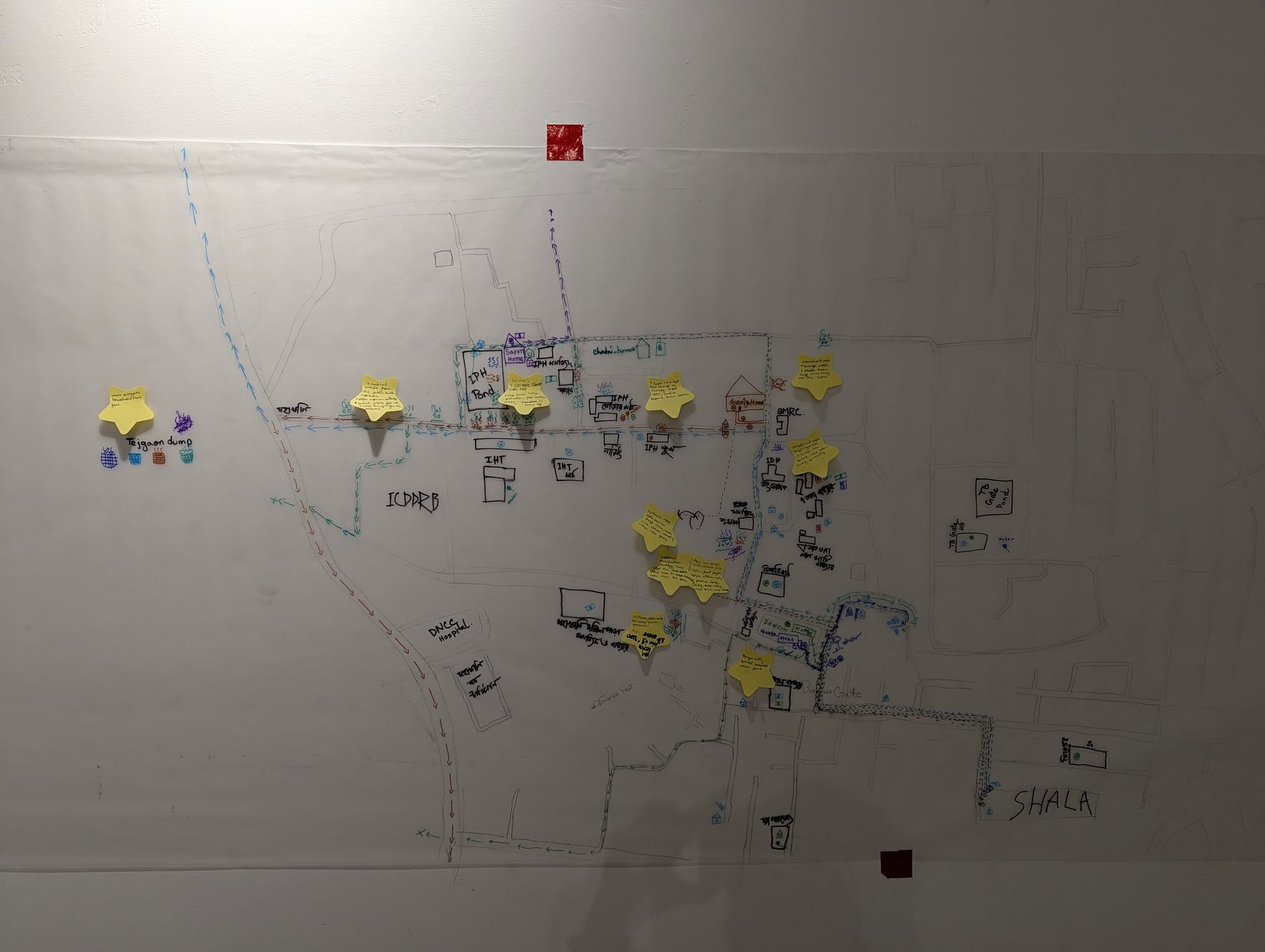
অংশগ্রহণমূলক ম্যাপিং কর্মশালা | Participatory mapping workshop
সাততলা এবং নিকেতন বাজার গেট এলাকার অংশগ্রহণকারীদের নিয়ে দিনব্যাপী অংশগ্রহণমূলক ম্যাপিং কর্মশালা অনুষ্ঠিত হয় যেখানে এলাকার প্লাস্টিকের হটস্পট চিহ্নিত করা হয়। এই প্রক্রিয়াটি প্রমাণ করে যে প্লাস্টিকগুলি এলাকায় জমা হওয়া কঠিন বর্জ্যের সাথে সবচেয়ে বেশি জড়িত।
কর্মশালাটি শুরু হয়েছিল অংশগ্রহণকারীদের সম্মিলিতভাবে তাদের পাড়ার রাস্তার স্কেচ তৈরি করে, তাদের বাড়ি, প্রতিষ্ঠান, যেখানে তারা খেলাধুলা করে এবং আড্ডা দেয় এবং তাদের যাতায়াতের পথ চিহ্নিত করে। অনুশীলন শেষ করার পরে, আমরা প্রতিদিন যে বাস্তবতার মুখোমুখি হই এবং গ্রহণ করি তার উপর প্রতিফলন করতে পারি, যেখানে আমাদের বাড়ি, স্কুল এবং খেলার জায়গাগুলি প্রায়শই বর্জ্য পদার্থের স্তূপের সাথে সংলগ্ন থাকে, যা পচনের দুর্গন্ধের কারণে অস্বস্তির কারণ হয়, অথবা বৃষ্টি হলে জলাবদ্ধ রাস্তা।
অংশগ্রহণকারীরা তাদের পাড়ায় বেড়ে ওঠার অভিজ্ঞতা ভাগ করে নিতে শুরু করেন, যেখানে একসময় বাস্তবতা এরকম ছিল না, এবং এক দশক আগেও কীভাবে তারা প্রকৃতির স্থান বা বিশ্রামের সুযোগ পেয়েছিলেন। এর ফলে নগরায়নের প্রক্রিয়া কীভাবে কার্যকরভাবে পাড়াটিকে বদলে দিয়েছে তা বোঝা যায় এবং অংশগ্রহণকারীরা পাড়ায় বিদ্যমান পদ্ধতিগত সমস্যাগুলির আরও তদন্ত এবং একটি সারসংক্ষেপ গঠনের জন্য ধারণা প্রস্তাব করেন।
দিনটি শেষ হয় "ALBATROSS" নামক একটি বিনামূল্যের পাবলিক আর্টওয়ার্ক ডকুমেন্টারি ফিল্মের জনসাধারণের জন্য প্রদর্শনের মাধ্যমে। এই ডকুমেন্টারি ফিল্মে সমুদ্রের প্লাস্টিক দূষণের বিষয়টি তুলে ধরা হয়েছে, যেখানে আলবাট্রসের প্রাকৃতিক বাস্তুতন্ত্রের উপর এর প্রভাবের উপর আলোকপাত করা হয়েছে। দর্শকরা ঢাকায় পাখির সংখ্যা এবং বৈচিত্র্যের পরিবর্তন কীভাবে লক্ষ্য করেছেন তা ভাগ করে নিয়েছেন, বিশেষ করে বর্জ্যের আশেপাশে যেখানে একসময় কাকের কা-কা উচ্চস্বরে এবং সর্বব্যাপী ছিল। এটি প্লাস্টিক দূষণের বিশ্বব্যাপী বাস্তবতাকে আশেপাশের এলাকার অভিজ্ঞতার সাথে সংযুক্ত করেছে।
Daylong Participatory mapping workshop with participants from Sattola and Niketon Bazar Gate area marking plastic hotspots in the community. The process demonstrated that plastics were most visibly associated with solid waste accumulated in the area.
The workshop began with participants collectively sketching the roads of their neighbourhood, marking their homes, institutions, where they play and hangout, and also their commute pathways. Once we finished the exercise, we could reflect on the reality we face and accept on a daily basis, the one where our homes, schools, and playspaces are often adjacent to the piles of waste materials, which cause discomfort owing to the smells from decomposition, or waterlogged roads when it rains.
Participants began to share their experience of growing up in the neighbourhood, where once this was not the reality, and how they had access to spaces of nature or respite even a decade ago. This led to understanding how the process of urbanization has effectively changed the neighbourhood, and participants proposed ideas to further probe and form an overview of the systematic issues that persist in the neighbourhood.
The day ended with a public screening of the documentary film ALBATROSS, a free public artwork, which explores the issue of ocean plastic pollution focusing on how it affected the Albatross’ natural ecosystem. Viewers shared how they noticed changes in the numbers and diversity of birds in Dhaka, especially around waste where once the Ka-Ka of crows were loud and omnipresent. This connected the global reality of Plastic Pollution with the experiences of the neighbourhood.